More time for care
Less routine in evidence and queries – more time for patients.
 Automation that feels like teamwork.
Clinic Assistant · Assistant
The Clinic Assistant takes over routine work in admissions, coding preparation, billing and Medical Service audits – so your teams have more time for patients.
What the Clinic Assistant handles:
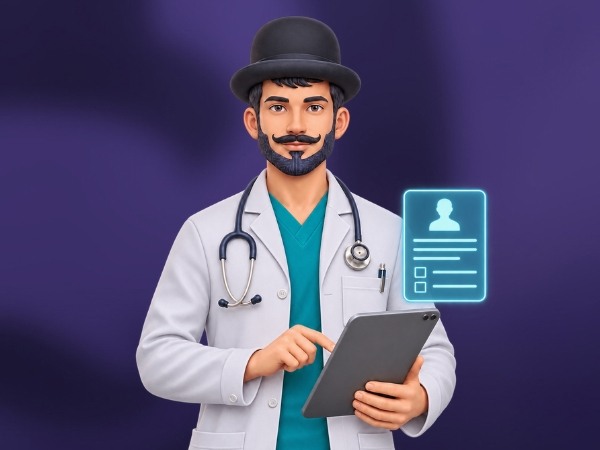
How a digital worker relieves administration and medical controlling: less routine, secured revenue, audit-ready processes.
Less routine in evidence and queries – more time for patients.
Complete records and monitored deadlines help to avoid revenue losses.
Every step runs as a BPMN 2.0 process and is logged for the Medical Service, internal audit and external audits.
Role-based permissions, logging and data minimisation under the GDPR, the German BDSG and state law.
From admission to Medical Service audit: the Clinic Assistant prepares, qualified staff approve medical content and coding.
The Clinic Assistant works with the existing hospital information system (HIS) and healthcare standards – the primary system stays in the lead.
Integration with Dedalus ORBIS, CGM CLINICAL, i.s.h.med, Meierhofer MCC, NEXUS and the successor systems to SAP IS-H.
Standardised exchange via HL7 FHIR and ISiK, the specification of Germany's digital health agency gematik, plus data transmission to payers under § 301 SGB V.
Germany's telematics infrastructure (TI), KIM secure messaging and electronic patient record (ePA) processes run through the facility's approved primary systems.
Three automation levels – matched to the task.

BPMN rule-based
Works strictly according to compliance and process rules (BPMN 2.0 & process engine) – perfect for structured rule sets and guided case handling, even in high-security areas.

AI-powered
Understands unstructured data, emails and contracts via LLMs, takes over complex checks and decisions – autonomous tasks complementing existing systems.

Autonomous AI orchestration
Solves whole processes autonomously and connects individual AI agents into teams – autonomous data transfer between legacy systems and web APIs, without media breaks.
The Clinic Assistant is tailored to the administration of hospitals, MVZ and rehabilitation facilities – not to medical decisions.
The most common questions about the Clinic Assistant.
No. It makes no diagnoses, gives no therapy or triage recommendations and is deliberately not a medical device. Qualified staff approve all medical content and coding.
Around 70 % automation is achievable for the typical tasks of the Clinic Assistant – qualified staff, whom the assistant supports in a structured way, deliberately approve medical content and coding.
In Germany, processing follows Art. 9 GDPR, § 22 of the Federal Data Protection Act (BDSG) and the relevant state hospital act – with data processing agreements, confidentiality obligations under § 203 of the Criminal Code, role-based permissions and logging. Patient data are not used to train AI models.
Before invoicing, it checks whether the documentation is complete, prepares coding suggestions for approval and monitors deadlines and records in the audit procedure.
Common HIS via HL7 FHIR, ISiK and interfaces, plus coding and grouper software and appointment and patient portals.
Yes, as a process-oriented layer. The BPMN 2.0 workflows remain described independently of the HIS and can be transferred to the successor system.
Yes. The processes can be adapted to LKF, ELGA and e-card in Austria and to SwissDRG, TARPSY, ST Reha and TARDOC in Switzerland.