Rule-based on BPMN 2.0
Works strictly along your process and compliance rules. Every flow is modelled in the open BPMN 2.0 standard – structured and reproducible instead of rigid bot logic.
 Automation that feels like teamwork.
The rule-based digital worker: the Digital Assistant works strictly along your process and compliance rules on the basis of BPMN 2.0 – traceable, GDPR-compliant and around the clock.
A Digital Assistant is the rule-based form of a MR.KNOW digital worker. As a digital assistant it takes over clearly defined, structured tasks – from guided case handling and checking or approval steps to answering recurring requests.
Unlike a plain chatbot, the Digital Assistant follows modelled processes based on the open standard BPMN 2.0. Every step is documented, auditable and adjustable at any time – with no black box and no vendor lock-in. Compliance and process rules are upheld at all times, even in high-security environments.
The Digital Assistant integrates seamlessly into your existing systems such as ERP, CRM or HR – around the clock, freely scalable and GDPR-compliant.
When a task calls for independent decisions on unstructured data or the autonomous steering of entire cases, the assistant grows into a Digital Agent or Digital Worker.

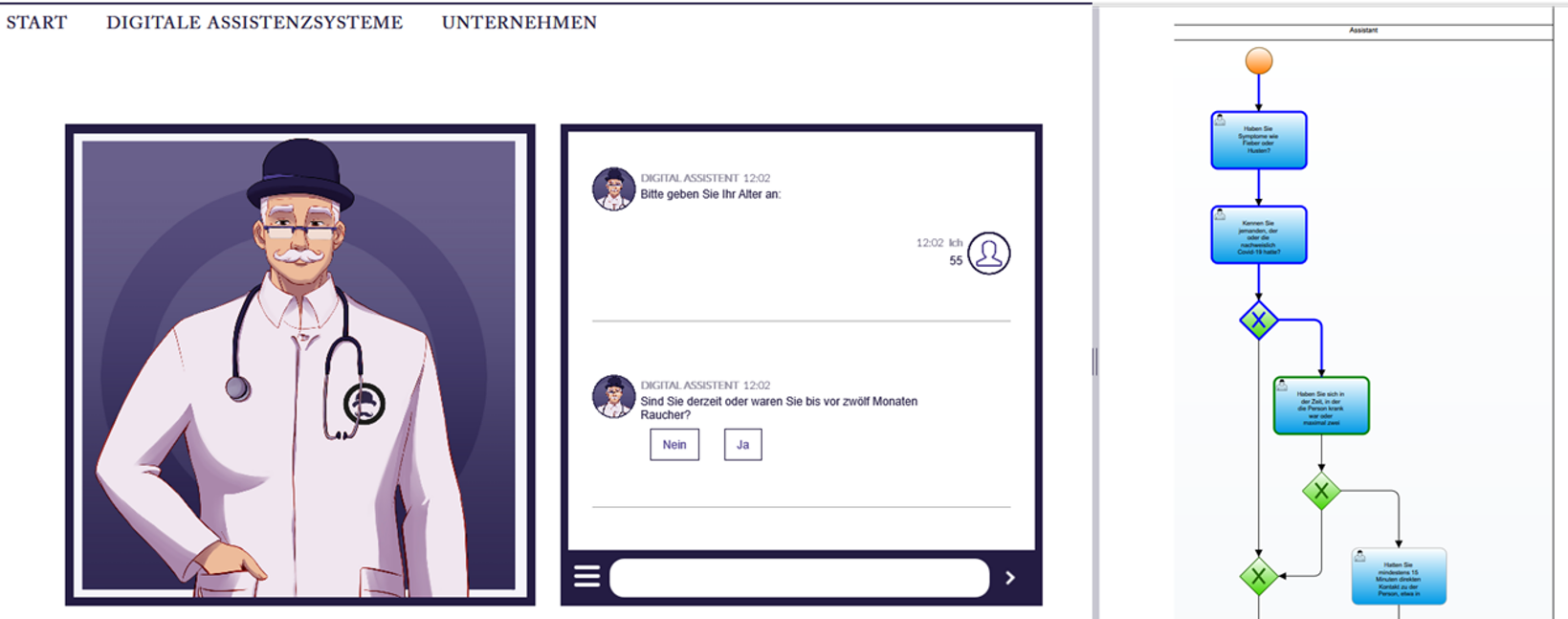
Rule-based, traceable and secure – from the very first task.
Works strictly along your process and compliance rules. Every flow is modelled in the open BPMN 2.0 standard – structured and reproducible instead of rigid bot logic.
Every step is documented and verifiable – no black box. Both the business and IT can see at any time what the assistant does and why.
Ideal for structured rulebooks: checking applications, capturing data, obtaining approvals and reliably answering standard requests.
Works 24/7 with no waiting times and can be multiplied at will during peak loads – with no extra onboarding effort.
Runs in the cloud or on-premise, AI-neutral and privacy-compliant – right up to high-security environments in public authorities and industry.
Plugs seamlessly into ERP, CRM and HR and, where needed, hands over to Digital Agent or Digital Worker – as part of one end-to-end process.
Your business teams transfer their knowledge into digital assistants on their own – from individual rules and work instructions all the way to entire legal texts: via the open standard BPMN 2.0, with functional descriptions or the graphical Process Board, no programming and no detour through IT.
Every flow follows the open BPMN 2.0 standard – yet your business team needs no BPMN knowledge. Understandable building blocks and guided modelling turn domain logic into a clean, auditable process.
Describe in plain business language what the digital assistant should do – it learns straight from that. No code, no developer tickets, no waiting.
On the graphical Process Board, business teams assemble their workflows like on a Kanban board with digital sticky notes and adjust them anytime. The matching BPMN 2.0 model is then generated automatically.
This way digital assistants never stand still: your business team keeps extending them with new tasks and rules – straight from day-to-day practice, with no dependency on IT.
Our example workers show typical entry scenarios into the world of digital workers – each can be extended into a Digital Assistant, Agent or Worker.
Three automation levels – the Digital Assistant is the rule-based entry point.
BPMN rule-based
Works strictly to your compliance and process rules (BPMN 2.0 & process engine) – ideal for structured rulebooks and guided case handling, even in high-security environments.

AI-powered
Understands unstructured data, emails and contracts via LLMs, takes on complex checks and decisions – autonomous tasks complementing existing systems.

Autonomous AI orchestration
Solves entire cases autonomously and connects individual AI agents as teams – autonomous data transfer between legacy systems and web APIs without media breaks.
The most important questions about the Digital Assistant.
A Digital Assistant is the rule-based form of a digital worker: an AI-powered, process-driven software colleague based on the open standard BPMN 2.0 that handles clearly defined, structured tasks traceably and around the clock.
The Digital Assistant works rule-based along BPMN processes, the Digital Agent makes AI-supported decisions on unstructured tasks, and the Digital Worker autonomously orchestrates entire cases across system boundaries.
No. Unlike a plain chatbot, a Digital Assistant follows modelled BPMN 2.0 processes. Every step is documented, auditable and integrated into your systems such as ERP, CRM or HR – with no black box.
Yes. Business teams train and extend digital assistants entirely themselves – via the open standard BPMN 2.0, with functional descriptions or the graphical Process Board, with no BPMN 2.0 skills or programming. This lets them keep extending them continuously, straight from day-to-day practice.